
BPPV Treatment: Causes, Symptoms & Vertigo Relief in Delhi NCR | Noida | Chandigarh | Gurugram
BPPV Treatment: What Your Doctor Won’t Tell You About Vertigo Relief
BPPV suddenly turns your world upside down—literally. That spinning sensation when you roll over in bed or look up might be Benign Paroxysmal Positional Vertigo (BPPV), the most common cause of vertigo affecting millions worldwide. Surprisingly, while many doctors prescribe medications or simply tell patients to “live with it,” effective treatments exist that can resolve symptoms in minutes.
Unfortunately, these quick-fix solutions often go unmentioned in standard doctor visits. Instead of medication that merely masks symptoms, specific repositioning maneuvers can address the actual cause—displaced calcium crystals in your inner ear. This guide examines what BPPV is, why it happens, how it’s diagnosed, and most importantly, the effective treatments your doctor might not have told you about. You’ll also learn practical strategies to prevent recurrence and manage symptoms long-term, potentially saving yourself from unnecessary suffering and medical expenses.
What is BPPV and how does it affect your balance?
Imagine your inner ear as a sophisticated motion detector that helps maintain your balance. Benign Paroxysmal Positional Vertigo (BPPV) occurs when this delicate system malfunctions, causing brief episodes of dizziness that make you feel like you’re spinning even when perfectly still.
Understanding the inner ear and semicircular canals
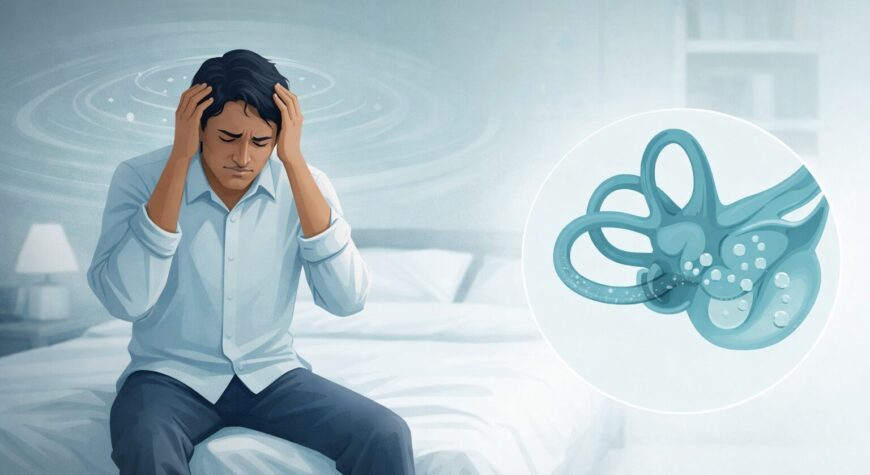
Your balance system relies on an intricate network within your inner ear called the vestibular system. This remarkable structure includes three fluid-filled semicircular canals arranged at different angles to each other. These canals work like a three-dimensional coordinate system, detecting head movements in various directions.
The semicircular canals connect to structures called the utricle and saccule, which contain tiny calcium carbonate crystals known as otoconia or otoliths. These crystals sit on hair cells and play a crucial role in sensing head position and linear acceleration. When functioning correctly, this system sends precise signals to your brain about your body’s position and movement.
What happens when crystals move out of place
BPPV develops when otoconia break free from their normal location in the utricle and migrate into one or more semicircular canals where they don’t belong [1]. These displaced crystals then float freely in the canal fluid (canalolithiasis) or sometimes adhere to the cupula (cupulolithiasis) [2].
Here’s what happens during a BPPV episode:
-
You change your head position (rolling over in bed, looking up, or bending over)
-
The displaced crystals shift with gravity, creating fluid movement in the canal
-
This movement sends false signals to your brain that you’re spinning
-
Your brain receives conflicting information from your eyes and body
-
You experience vertigo, often accompanied by nystagmus (involuntary eye movements)
The posterior semicircular canal is most commonly affected, accounting for 60-79% of BPPV cases, followed by the lateral canal at 16-31% [2]. This difference occurs primarily because the posterior canal is positioned as the lowest part of the inner ear when lying down, making it a natural collection point for loose crystals—similar to how debris collects in a sink’s U-bend [3].
Why BPPV is the most common cause of vertigo
BPPV stands as the most prevalent cause of peripheral vertigo, representing more than half of all cases [4]. Approximately 20% of people evaluated for dizziness receive a BPPV diagnosis [5]. The lifetime prevalence of BPPV is about 2.4%, with a one-year incidence of 0.6% [6].
Although BPPV can affect people of all ages, it becomes particularly common with advancing age. About half of all adults over 50 will experience at least one BPPV episode during their lifetime [5]. This age-related prevalence likely occurs because the otoconia naturally degrade over time, making them more prone to detachment.
Most cases of BPPV are idiopathic, meaning they occur without an identifiable cause. However, potential risk factors include head trauma, inner ear infections, Ménière’s disease, migraine, vitamin D deficiency, and other vestibular conditions [1].
The hallmark of BPPV is its positional nature—symptoms typically last less than one minute and occur specifically with head movement. Nevertheless, many people with BPPV also experience mild unsteadiness between vertigo episodes, which can significantly impact quality of life and increase fall risk, especially in older adults [7].
Common causes and risk factors of BPPV
Understanding why certain people develop BPPV provides valuable insights into this common vestibular condition. Unlike many medical conditions with clear causes, the origins of BPPV often remain mysterious, yet researchers have identified several key risk factors worth noting.
Idiopathic BPPV: when no cause is found
First and foremost, approximately 50-70% of BPPV cases are classified as idiopathic, meaning doctors cannot identify a specific trigger [8]. This “primary BPPV” occurs spontaneously without any apparent cause, despite thorough medical evaluation. In fact, around 80% of all cases fall into this category [9]. Many patients, especially older adults, experience BPPV without any preceding illness or injury. This unpredictability contributes to the frustrating nature of the condition, as patients often cannot pinpoint what triggered their symptoms or prevent future episodes through lifestyle modifications alone.
Head trauma and inner ear damage
Head trauma represents the most significant identifiable cause of BPPV, especially in patients under 50 years old [10]. For younger individuals experiencing vertigo, a history of head injury should immediately raise suspicion of BPPV. The most common traumatic event leading to BPPV is motor vehicle crashes, accounting for 57% of trauma-related cases [11]. Moreover, even minor impacts during everyday activities—such as mountain biking, roller skating, or long bus journeys—can potentially dislodge the inner ear crystals [12].
Post-traumatic BPPV typically develops within the first two weeks following injury, with studies showing 21-23% of adults with work-related head trauma subsequently developing the condition [13]. Furthermore, traumatic BPPV cases differ from idiopathic ones in several important ways:
-
They require multiple treatment maneuvers more frequently
-
They have higher recurrence rates (57% versus 19% for idiopathic cases)
-
They more commonly affect both ears simultaneously
-
They often involve multiple semicircular canals [11]
Age, gender, and vitamin D deficiency
Advancing age significantly increases BPPV risk, with peak incidence occurring between ages 50-80 [13]. Indeed, approximately 3.4% of people over 60 experience BPPV annually [13]. This age-related vulnerability likely stems from natural degeneration within the inner ear structures.
Gender additionally plays a notable role, with women experiencing BPPV at approximately three times the rate of men [10]. This disparity becomes particularly pronounced during menopause, suggesting hormonal factors may contribute to crystal displacement. Interestingly, studies have found that women taking estrogen for menopausal symptoms showed significantly lower BPPV incidence [14].
Vitamin D deficiency has emerged as another important risk factor. Research indicates this deficiency correlates with both BPPV severity and recurrence rates [9]. Consequently, some studies have shown that vitamin D supplementation may help reduce recurrent attacks [15].
Other medical conditions linked to BPPV
Various medical conditions increase BPPV susceptibility. Bone health problems are particularly significant—about 80% of BPPV patients have either osteopenia or osteoporosis [16]. Postmenopausal women with these conditions face approximately three times higher BPPV risk than their peers [16].
Other associated conditions include:
-
Inner ear disorders (Ménière’s disease, vestibular neuritis, labyrinthitis)
-
Migraine (11.4% of BPPV patients also experience migraines)
-
Cardiovascular issues (hypertension affects 48.2% of BPPV patients)
-
Metabolic conditions (diabetes affects 19% of patients, dyslipidemia 30.5%)
-
Anxiety disorders (present in 36.8% of cases) [14]
Additionally, geographic factors may influence risk—one study found rural residents faced elevated BPPV risk compared to urban dwellers (aHR: 1.17) [14]. This suggests environmental or occupational factors might play roles not yet fully understood.
How BPPV is diagnosed by specialists
Diagnosing BPPV requires specific tests that can pinpoint exactly which part of your inner ear is affected. Accurate diagnosis is crucial since many conditions can mimic BPPV symptoms, yet their treatments differ dramatically.
The Dix-Hallpike maneuver explained
The Dix-Hallpike maneuver serves as the gold standard test for diagnosing posterior canal BPPV, which accounts for most cases [17]. This 70-year-old diagnostic technique remains remarkably effective due to its simplicity and accuracy [18].
The test involves several precise steps:
-
The patient sits upright on an examination table
-
The doctor rotates the patient’s head 45 degrees toward the ear being tested
-
The patient is quickly moved to a lying position with their head extending about 20-30 degrees below horizontal
-
The examiner observes the patient’s eyes for approximately 30 seconds
If positive, this maneuver triggers the characteristic vertigo and nystagmus that confirms BPPV. For thorough evaluation, both ears must be tested separately if the first side shows no response [1].
What nystagmus reveals about your condition
Nystagmus—involuntary eye movements—provides the most reliable clue for diagnosing BPPV. In posterior canal BPPV, specialists look for torsional (rotary) and upbeat nystagmus that begins after a brief delay of 2-20 seconds [19].
The characteristics of this nystagmus tell a detailed story:
-
Latency period: Typically 2-5 seconds between position change and symptom onset [17]
-
Duration: Less than 60 seconds, often 20-40 seconds [1]
-
Pattern: A crescendo-decrescendo intensity that gradually builds then fades [8]
-
Fatigability: Nystagmus often diminishes with repeated testing [1]
Essentially, each canal produces distinctive eye movement patterns. Horizontal canal BPPV creates purely horizontal nystagmus and requires a different test called the supine roll test [19].
When imaging or hearing tests are needed
Notably, most BPPV cases do not require extensive testing beyond the diagnostic maneuvers. The American Academy of Otolaryngology guidelines advise against routine imaging or vestibular testing for typical BPPV presentations [17].
Occasionally, additional testing becomes necessary:
-
When neurological symptoms accompany vertigo
-
If nystagmus patterns suggest central causes
-
When symptoms persist despite appropriate treatment
For atypical presentations, audiometry may help rule out conditions like Ménière’s disease [20], primarily because BPPV generally doesn’t affect hearing. Likewise, MRI or CT scans are reserved for suspected neurological issues such as stroke, multiple sclerosis, or tumors [8].
Why misdiagnosis is common
BPPV remains frequently misdiagnosed or underdiagnosed [8]. A study of emergency department visits found that among patients diagnosed with peripheral vestibular disorders, 81% had nystagmus descriptions incompatible with their diagnosis [5].
Several factors contribute to this diagnostic confusion:
-
Inadequate examination: Many clinicians fail to document proper Dix-Hallpike testing
-
Poor nystagmus documentation: When nystagmus is noted, critical details about direction and duration are often omitted
-
Overlapping symptoms: Conditions like Ménière’s disease, vestibular neuritis, and migraine-related vertigo can present similarly [4]
-
Over-reliance on imaging: Providers increasingly order low-value tests like head CTs while underutilizing valuable bedside examinations [5]
Unlike many medical conditions, BPPV diagnosis hinges on observing specific physical findings rather than laboratory values or imaging results.
Effective treatments your doctor might not mention
Most BPPV patients are surprised to learn that the most effective treatments don’t come in pill form. Unfortunately, many practitioners default to prescribing medications that merely mask symptoms instead of addressing the root cause.
Why medications like betahistine don’t fix BPPV
Betahistine and other vestibular suppressants typically provide minimal symptom relief yet fail to solve the fundamental problem [21]. These medications can’t reposition displaced crystals—they only temporarily reduce dizziness while adding unwanted side effects like grogginess and sleepiness [3].
Vestibulosuppressants such as antihistamines (meclizine), benzodiazepines (diazepam), and anticholinergics (scopolamine) play a remarkably limited role in BPPV management [8]. In fact, current medical guidelines explicitly advise against medication as first-line treatment given their poor benefit-to-risk ratio [3].
The Epley and Semont maneuvers
In contrast, canalith repositioning procedures (CRPs) offer nearly immediate relief by addressing the actual cause. The Epley maneuver, most widely used in North America, involves a specific sequence of head positions that guide displaced crystals out of the semicircular canals and back into the utricle where they belong [22].
This simple procedure boasts impressive success rates—84% of patients see improvement after just one treatment and 97% after three sessions [23]. The Epley works by using gravity to move crystals through a series of positions, each held for 30-60 seconds [24].
The Semont maneuver, an equally effective alternative, uses faster movements where the patient is quickly moved from lying on one side to the other [25]. Both procedures take only 10-15 minutes to perform and are particularly useful for posterior canal BPPV [2].
When to consider vestibular rehabilitation
Vestibular rehabilitation therapy (VRT) becomes an excellent option when:
-
Patients have persistent symptoms despite repositioning maneuvers
-
Spine issues contraindicate repositioning procedures
-
Multiple canals are affected
This specialized physical therapy helps retrain your brain to compensate for vestibular problems through exercises that improve balance and reduce dizziness [6]. Though VRT doesn’t reduce recurrence rates, it significantly diminishes symptom unpleasantness [26].
Surgical options for stubborn cases
Whereas most patients respond well to non-invasive treatments, approximately 3-5% develop persistent, debilitating BPPV resistant to multiple repositioning attempts [27]. For these rare cases, surgical interventions may be considered.
The preferred surgical approach today is posterior semicircular canal occlusion (PSCO), which effectively stops vertigo by blocking crystal movement [28]. This outpatient procedure boasts nearly 100% success rates, though it carries a small risk (about 5%) of hearing loss [27].
The older singular nerve section technique has been largely abandoned due to its technical difficulty and lower success rates (79-94%) [27].
Preventing recurrence and managing long-term symptoms
After successful treatment, many patients wonder what steps they can take to prevent future BPPV episodes. While there’s no guaranteed method to prevent recurrence, several strategies can reduce risk and manage symptoms effectively.
Lifestyle changes to reduce vertigo episodes
For this purpose, consider these modifications:
-
Stay hydrated to maintain proper inner ear fluid balance
-
Manage stress through deep breathing, meditation, or yoga, as stress can trigger vertigo in some individuals
-
Improve sleep quality by maintaining consistent sleep schedules and creating a dark, quiet sleeping environment
-
Monitor diet, potentially reducing salt, caffeine, and alcohol intake
-
Avoid sudden head movements that might trigger symptoms
-
Address other health conditions like hypertension, diabetes, and hyperlipidemia, which increase BPPV recurrence risk [29]
Exercises to improve balance and reduce falls
Vestibular rehabilitation therapy helps retrain your brain to adapt to balance challenges. Home exercises include:
-
Home Epley maneuvers for recurrent symptoms, which often resolve vertigo immediately [22]
-
Brandt-Daroff exercises performed in sets of five repetitions, three times daily for two weeks [30]
-
Walking exercises on flat surfaces at steady paces to improve overall stability
When to follow up with a specialist
Typically, reassessment 24 hours after initial treatment is more beneficial than a 1-hour follow-up [7]. Accordingly, contact your provider if:
-
Symptoms return within a day after treatment
-
You experience lateral canal conversion (about 5-6% of cases) [31]
-
Vertigo persists beyond expected timeframes
-
New symptoms develop
Understanding the risk of recurrence
BPPV recurs in approximately 27% of patients, with 50% experiencing recurrence within six months [32]. Multiple factors increase recurrence risk:
-
Age: Patients 65+ years are 2.91 times more likely to experience recurrence within one year [33]
-
Gender: Women face higher recurrence rates [34]
-
Medical conditions: Meniere’s disease, diabetes, hypertension, migraine, osteoporosis [34]
-
Vitamin D deficiency: Supplementation may reduce recurrence in deficient patients [35]
Conclusion
BPPV remains one of the most treatable forms of vertigo, yet many patients endure unnecessary suffering because they lack information about effective solutions. Throughout this article, we’ve seen how simple repositioning maneuvers can address the root cause—displaced calcium crystals—rather than merely masking symptoms with medication.
Understanding BPPV empowers you to advocate for proper diagnostic testing and treatment. The next time vertigo strikes, remember that the Dix-Hallpike test should precede any prescription, and canalith repositioning procedures like the Epley or Semont maneuvers should represent first-line treatments.
Most importantly, don’t accept “learn to live with it” as your only option. Though BPPV recurrence happens for approximately 27% of patients, proper management strategies significantly reduce its impact on daily life. Simple lifestyle adjustments, balance exercises, and prompt follow-up care make living with this condition much more manageable.
Your healthcare provider might not volunteer information about these specialized treatments because many lack training in vestibular disorders. Therefore, asking specifically about repositioning maneuvers could save you months of unnecessary medication side effects and ongoing vertigo episodes.
BPPV might temporarily turn your world upside down, but with the right approach, relief often comes quickly. Armed with knowledge about proper diagnosis and effective treatments, you can face this common condition confidently and return to normal activities sooner than you might expect.
Frequently Asked Questions
1. What is BPPV and what is the full form of BPPV?
Benign Paroxysmal Positional Vertigo is the full form of BPPV. It is a common type of positional vertigo where tiny inner ear crystals (otoconia) move into the semicircular canals and disturb your balance system, causing brief episodes of vertigo and dizziness.
2. What causes BPPV and how does it happen?
BPPV happens when inner ear crystals (otoconia) break loose from the utricle and enter the semicircular canals, especially the posterior canal. This crystal movement sends wrong signals to your vestibular system, leading to spinning sensations when lying down, turning the head, getting up from bed, or changing posture.
3. What are the main symptoms of BPPV?
Typical symptoms of BPPV include a spinning sensation when lying down, dizziness when turning the head, vertigo when getting up from bed, nausea with vertigo, and loss of balance. Some people also notice neck pain with dizziness and feel unsteady or off-balance between vertigo episodes.
4. Is BPPV dangerous?
BPPV itself is usually not dangerous or life-threatening, but the dizziness and balance disorder can increase your risk of falls, especially in older adults. Because serious conditions can mimic vertigo, any sudden, severe, or new dizziness should be assessed by a vertigo specialist or physiotherapist for a proper diagnosis.
5. How long does BPPV last, and can BPPV be cured?
A single BPPV episode usually lasts less than a minute, but attacks can recur for days or weeks if not treated. With the right BPPV treatment, especially repositioning maneuvers and vestibular physiotherapy, most patients get complete relief, and recurrent BPPV can be managed or prevented.
6. What is the difference between BPPV and vertigo in general?
Vertigo is a symptom—a feeling that you or the room is spinning. BPPV is a specific cause of vertigo related to inner ear crystals and positional changes, making it one of the most common and most treatable vertigo conditions.
7. How is BPPV different from Ménière’s disease and cervical vertigo?
BPPV causes brief, positional vertigo without hearing loss, whereas Ménière’s disease often includes hearing loss, tinnitus, and a feeling of fullness in the ear. Cervical vertigo or neck-related vertigo is linked to neck dysfunction and posture-related vertigo, where dizziness is more associated with neck pain and movement rather than displaced inner ear crystals.
8. How do doctors diagnose BPPV?
Specialists diagnose BPPV using positional tests such as the Dix-Hallpike maneuver and supine roll test to observe nystagmus (involuntary eye movements) and vertigo. Imaging or hearing tests are usually not required unless there are red-flag neurological symptoms or suspicion of other conditions.
9. What is the best treatment for BPPV?
The best treatment for BPPV is canalith repositioning maneuvers such as the Epley maneuver or Semont maneuver, which use gravity to move inner ear crystals back to their correct place. These BPPV exercises often provide rapid vertigo relief and are more effective than medication, which usually only masks dizziness.
10. Can physiotherapy cure BPPV and vertigo?
Yes, vestibular physiotherapy for BPPV and vestibular therapy for vertigo are highly effective at treating positional vertigo and balance problems. A skilled physiotherapist for vertigo uses Epley maneuver, other BPPV exercises, and customized balance training to restore your balance system and reduce recurring vertigo.
11. Which exercises are helpful for BPPV and dizziness?
Epley maneuver for vertigo, Brandt-Daroff exercises, and other home BPPV exercises are commonly prescribed to reposition crystals and reduce dizziness. Vestibular rehabilitation also includes gaze-stabilization and balance exercises to improve stability and reduce loss of balance due to vertigo.
12. Why don’t vertigo medications like betahistine fix BPPV?
Medications such as betahistine and other vestibular suppressants may temporarily reduce dizziness and nausea, but they do not move inner ear crystals or correct the root cause of BPPV. Over-reliance on pills can delay proper BPPV treatment and prolong vertigo symptoms.
13. What is vestibular physiotherapy and who needs it?
Vestibular physiotherapy is a specialized form of rehabilitation that targets the vestibular system, semicircular canals, and balance system through specific exercises. It is recommended for patients with chronic vertigo, balance disorder, neck-related vertigo, and those who still feel dizzy or unstable even after BPPV repositioning maneuvers.
14. Are urban lifestyle and screen time linked to vertigo?
Urban lifestyle causes of vertigo include chronic stress, poor posture, long screen time, and neck dysfunction, all of which can aggravate dizziness and cervical vertigo. While they may not directly cause BPPV, they can worsen symptoms and increase the risk of recurring vertigo episodes
15. What are the local options for BPPV treatment in Delhi NCR and Chandigarh?
You can seek BPPV treatment in Delhi, Noida, Gurugram, and Chandigarh at clinics that offer vestibular physiotherapy and Epley maneuver–based care. Searching for terms like “BPPV treatment in Delhi”, “vertigo treatment in Delhi NCR”, “BPPV treatment in Noida”, “vertigo clinic in Gurugram”, or “BPPV treatment in Chandigarh” will help you find specialized vertigo clinics and physiotherapists
16. Which doctor or specialist should I consult for vertigo and dizziness?
For persistent vertigo, you can consult an ENT specialist, neurologist, or a physiotherapist experienced in vestibular therapy. Many patients get the best results in a dedicated vertigo clinic where a multidisciplinary team offers diagnosis, BPPV treatment, vestibular physiotherapy, and follow-up care.
17. What should I search for if I need urgent, nearby vertigo care?
Patients ready for treatment often look for phrases like “best doctor for vertigo”, “specialist for dizziness”, “physiotherapist for vertigo”, “vertigo clinic near me”, or “treatment for chronic vertigo”. These conversion-intent searches help connect you quickly with clinics that actively treat BPPV, positional vertigo, and other inner ear vertigo disorders.
